
Beyond the Collar: The Priest Who Built UniMak's Financial Backbone
Reverend Father Benjamin H. Sesay, PhD, is a Catholic priest and the University of Makeni's first Director of Finance and Administration. He wrote the policies, set up the offices and introduced the audits behind the university's finances. In November 2026 he defended a PhD in Sustainable Development.
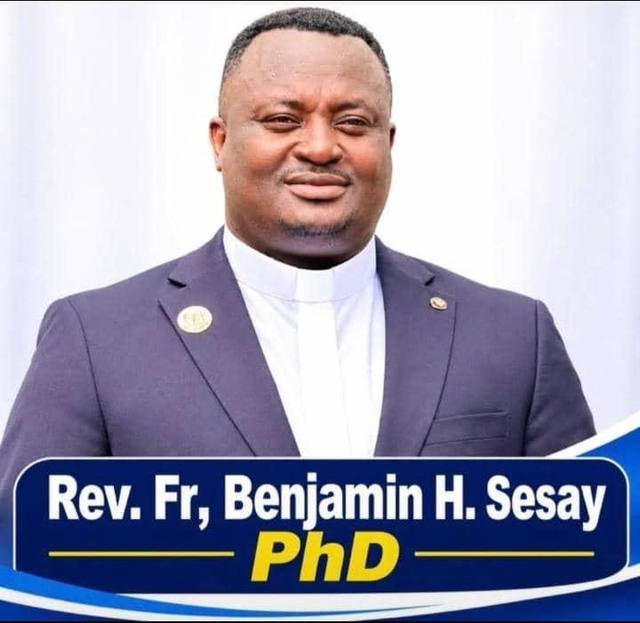
When Reverend Father Dr Benjamin H. Sesay arrived at the University of Makeni in early 2012, the institution was still developing its administrative structures. Its finance team had just two members, both responsible for collecting fees. Over the years, he would help build the systems that now support the university's financial and administrative operations.
On 5 November 2026, he stood before an audience at the UniMak Auditorium to defend his PhD in Sustainable Development. It was another milestone in a journey that had taken him from childhood in Magburaka through the disruption of the civil war, an unexpected turn away from a prospective career in law and fifteen years in the priesthood.
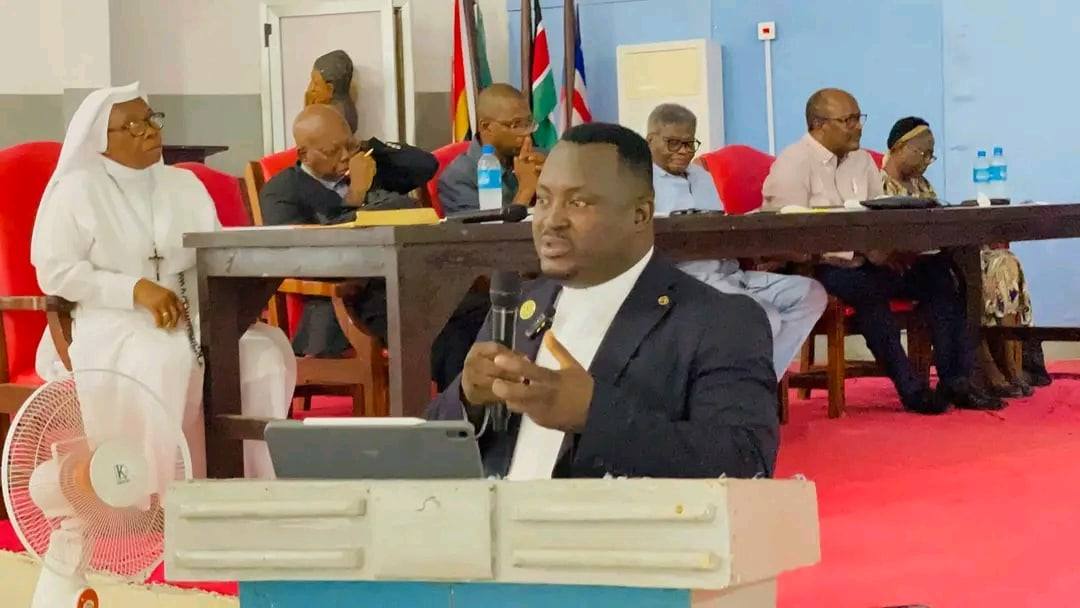
Today, Father Sesay serves as UniMak's Director of Finance and Administration, the first person to hold the position. Since 2017, he has also led Caritas Makeni, while overseeing the Catholic chaplaincy at the university's Yoni Campus. Away from these responsibilities, he has developed an interest in business, establishing enterprises of his own and mentoring students who have gone on to become entrepreneurs.
His work spans the Church, higher education and business. Although these responsibilities may appear different, he sees them as connected by a common principle: using resources responsibly and putting them to work for the benefit of others.
A childhood shaped by movement and change
Father Sesay spent his early childhood in Magburaka with his mother while his father was studying abroad. When his father returned and secured a government job, the family moved to Makeni before eventually settling in Port Loko. It was there that he began his formal education at RC School, Port Loko, where he studied from Primary One to Primary Six.
In his final year of primary school, he became school prefect. His class also sat the Selective Entrance Examination alongside Primary Seven pupils. He passed and proceeded to Government Secondary School for Boys, Magburaka.
In JSS 3, his class became the first group of pupils in Sierra Leone to sit the Basic Education Certificate Examination (BECE).
The idea of becoming a priest grew through encouragement from friends and people around him. One of those who supported his decision was Bob John Hassan Koroma, now Bishop of Makeni, who personally wrote his application to Saint Francis Junior Seminary.
Father Sesay spent a year at the junior seminary before the civil war brought his studies to an abrupt halt. When his family later settled in Lungi, he returned to secondary school in SSS 2, although he and his classmates should have been moving into SSS 3.
The disruption had left them with gaps in their education. To prepare for the next stage, the students attended remedial classes to strengthen their academic foundation and catch up on what they had missed. Father Sesay persevered and eventually completed secondary school with six credits, including a C6 in English Language.
The senior seminary required at least a C5 in English, so he did not meet the admission requirement. On his uncle's advice, he began considering another path and was preparing to study law at Fourah Bay College.
He had not yet started the course when an opportunity to return to the priesthood presented itself.
The late Bishop Giorgio Biguzzi reached out to students who had not met the senior seminary's entry requirements and facilitated their admission. Father Sesay accepted the opportunity and went to Kizito for his spiritual year.
"When the seminary opened its doors again, I left the idea of law without thinking twice. The priesthood was always what I wanted," he recalls.
From Kizito, he proceeded to the major seminary, where he completed a four-year degree in philosophy. He was then assigned to spend a year working with Reverend Father Professor Joseph Alimamy Turay, who was Director of Radio Maria and was establishing the Fatima Institute at the time.
After completing the assignment, Father Sesay returned to the seminary on recommendation and completed his degree in theology.
His next posting was Saint Joseph Parish in Lungi, where he first served as a deacon before being ordained a priest in 2011.Building UniMak's financial systems
While serving in Lungi, Father Sesay gained admission to a master's programme in accounting at the Institute of Public Administration and Management (IPAM). His interest in accounting was already taking shape, but on advice, he did not proceed with the programme.
Months later, Bishop Biguzzi brought him to Makeni to work with Father Turay at the University of Makeni. He arrived in early 2012, beginning a chapter that would shape much of his professional life.
At the time, the university's finance operations were modest. Two staff members handled fee collection, and much of the financial and administrative framework still needed to be established.
As UniMak's first Director of Finance and Administration, Father Sesay took on the task of building that framework. He developed the university's financial, procurement and assets policies, setting out procedures for spending, purchasing and managing institutional property.
He also introduced annual external audits and internal auditing arrangements, established a procurement office and put systems in place for stores management.
These changes were particularly important because UniMak raises and manages its own funds without government subventions. The university depends on its ability to generate and manage resources to meet its operational costs, including staff salaries.
Father Sesay says the university has maintained its salary obligations and that staff have never gone on strike over unpaid salaries.
His contribution has therefore involved more than overseeing accounts. It has been about creating systems that allow the university to manage its resources responsibly, remain accountable and sustain its operations.
Also read: The Young Lecturer leading the Blueprint in Sierra Leone
Beyond the university: Business and mentorship
Father Sesay's interests extend beyond the Church and university administration. Over the years, he has developed a strong interest in business and entrepreneurship, putting his knowledge of finance and management into practice.
He has pursued further studies alongside his professional responsibilities. He earned an MBA in Global Business and Sustainability through the Catholic University of Milan programme at Tangaza College in Nairobi, Kenya. Rather than undertake a longer programme in Italy, he chose the Nairobi option because it allowed him to complete his studies and return to his work at UniMak sooner.
But his interest in business has not remained in the classroom.
Father Sesay has established businesses of his own, giving him practical experience of the opportunities and demands that come with running an enterprise. He has also mentored many students who have gone on to become entrepreneurs and establish businesses of their own.
For him, supporting young people to become entrepreneurs is about more than encouraging them to start businesses. It is about helping them recognise opportunities, develop their ideas and apply what they have learnt to create something sustainable.
His involvement in business also means that he understands entrepreneurship from both sides: as someone who has established enterprises himself and as someone who has guided others towards doing the same.
This interest connects closely with his academic work in sustainable development. He recognises that development is not only about institutions and policies; it also depends on people's ability to create opportunities, manage resources and build livelihoods.
Through his own businesses and his work with aspiring entrepreneurs, he has sought to contribute to that process.
His recently defended PhD in Sustainable Development adds to an academic journey that has continued alongside his responsibilities in the Church, university and business.
Serving beyond the university
In 2017, Father Sesay took on another responsibility as Director of Caritas Makeni. The organisation was going through a period of transition, and he has since worked to strengthen its stability and institutional continuity.
After several years in the position, he is now preparing for a permanent successor, with the aim of ensuring that the organisation's work continues beyond his leadership.
His contribution at UniMak has also extended into the spiritual lives of students and staff.
At the Yoni Campus, he began holding prayer sessions in an available hostel room. What started as a small gathering gradually grew into a Catholic community known as Cathco and eventually developed into a fully established chaplaincy. He now heads the chaplaincy alongside other priests.
The growth of the chaplaincy reflects another side of his work at the university. While his administrative responsibilities involve financial policies, audits and institutional management, his pastoral work is centred on faith, community and spiritual guidance.
In January 2026, he marked fifteen years of priesthood and received an Apostolic Blessing from Pope Leo XIV.
Despite the demands of his different responsibilities, Father Sesay maintains a routine that begins early with prayer and reading before his first meeting of the day. He says the routine helps him remain focused and grounded.
The meaning of stewardship
For Father Sesay, priesthood and financial administration are not separate worlds. Both involve trust, accountability and service.
"In the Church, stewardship is a trust. The resources belong to God, and they are there to serve His people," he says. "At the altar or in the office reading an audit report, the job is the same: be accountable, be honest and serve."
That understanding of stewardship runs through his work. At UniMak, it guides how he approaches financial management. At Caritas, it informs his commitment to institutional responsibility. At the Yoni Campus, it finds expression in his pastoral work. Through business and mentorship, it extends to helping others develop opportunities for themselves.
His journey has not been without interruptions or difficult decisions. The war disrupted his education, his plans to study law never materialised, and his interest in accounting eventually found a place within his priestly vocation. Yet, at each stage, he found ways to keep learning, taking on new responsibilities and contributing to the institutions and people around him.
With his PhD defence behind him, his attention now includes preparing for the transition at Caritas Makeni and ensuring that the work he has helped establish at UniMak and the Yoni Campus continues to grow.
He hopes that the systems, communities and opportunities he has helped build will remain useful long after he leaves the positions he currently holds.
"I hope what we have built at UniMak, at Caritas and at the Yoni chaplaincy keeps growing long after I step aside," he says. "If people remember me, I would like it to be as a priest who served faithfully and left things in good order."
For Father Sesay, perhaps the measure of a life's work is not simply the positions held or the qualifications earned, but what remains after the work is done and the people who benefit from it.
Corrections and updates
- Correction, : An error of facts is fixed
- Clarification, : Wording made clear
We correct errors openly. Read our corrections policy.
Share this story
Read next
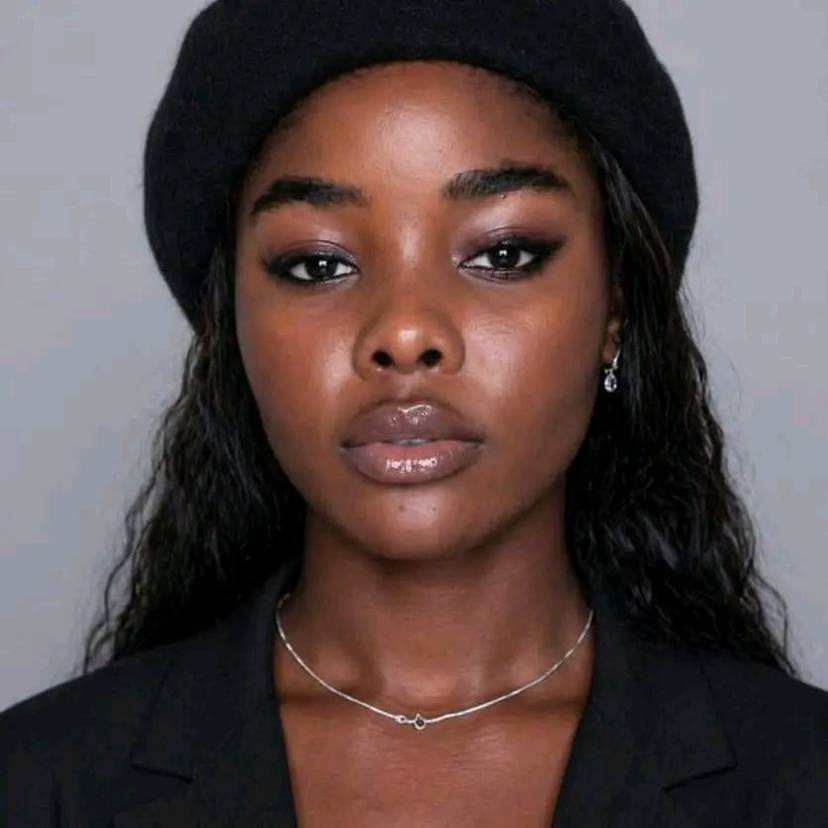
Beatrice Kamara: The student presenter building a media career
Beatrice Kamara is a student, a television presenter and a student leader. Each role makes its own demands on her time, and she gives all three her full attention.
Was this story useful?
Related reporting
Beatrice Kamara: The student presenter building a media career
Beatrice Kamara is a student, a television presenter and a student leader. Each role makes its own demands on her time, and she gives all three her full attention.
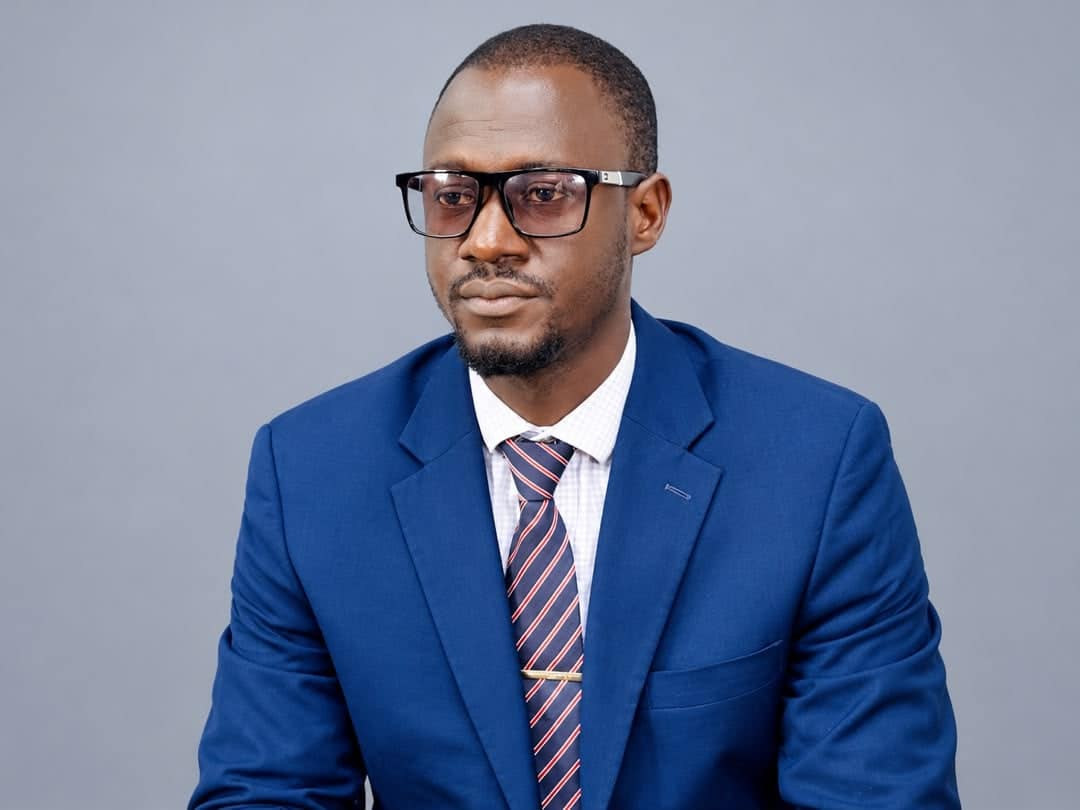
The Young Lecturer leading the Blueprint in Sierra Leone
In Makeni, Shebora Samba Kamara moves between the classroom, the radio studio and a growing political movement with the same steady focus.
Emilia Kamara-Jengo: A Sierra Leonean advocate championing women’s rights, peace and good governance
From her education in Makeni to leadership roles in civil society and women’s football, Emilia Kamara-Jengo has built a career spanning several institutions working to strengthen women’s rights, democratic participation and public life in Sierra Leone.
Get the week's best reporting from Sierra Leone.
One email a week. Free, and easy to leave.